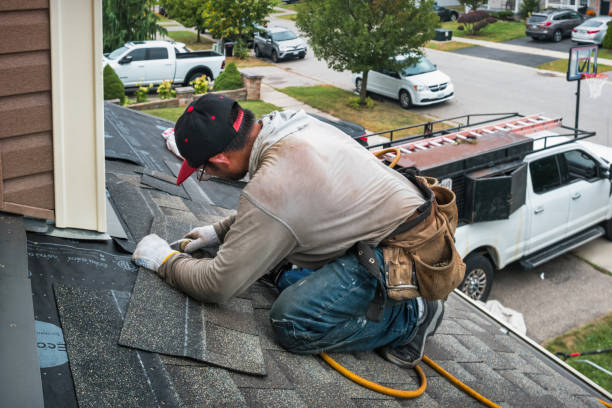
A torn-up roofline after a storm isn't a "get to it next week" problem, and we don't treat it like one — Roof Repair Smedway answers, scopes the damage, and dispatches a crew across White Bird fast.

Roof Repair Smedway grew out of White Bird, ID job sites, not a corporate rollout plan — that's still how we staff every Roofing crew we send to White Bird.
Ask to see our White Bird, ID license and insurance certificate and you'll have it in your hand before the estimate even starts.
Every Roofing job, from a single flashing repair to a full White Bird tear-off, gets built to the same standard: the one that holds up, not the one that's fastest to invoice.

Every lead installer carries current White Bird, ID credentials.
A midnight call gets the same urgency as a noon call.
No invoice surprises once work is underway.
We already know White Bird's weather patterns and permit process.
A roof rarely just fails one day — it usually spends months quietly showing signs that get written off as cosmetic.
None of the six signs below require an emergency call on their own, but each one is worth a scheduled inspection before it turns into something bigger.
Shingles shed their protective granules as they wear down, and a gutter full of grit is an early tell.
A cupped shingle traps moisture instead of shedding it, which speeds up decking rot underneath.
Pinpricks of light in the attic are an early, fixable version of what becomes a leak later.
A spreading brown ring on a ceiling almost always means water is tracking in from somewhere on the roof.
Rooms that run noticeably hotter than the rest of the house often trace back to roof or attic issues.
Even a small missing section can let in enough water to rot decking in a single storm.
Whatever the issue — emergency, routine, or somewhere in between — it gets handled by a crew that specializes in that exact type of work.
These categories aren't marketing labels; they reflect how our crews are actually organized and dispatched across White Bird, ID.
When wind or hail rips open a section of roofing, we tarp it fast to stop water intrusion, then schedule the permanent fix right behind it.
From a few cracked shingles to a complete tear-off, residential jobs get scoped against manufacturer spec, not a rough guess.
We schedule commercial jobs to minimize disruption to tenants and foot traffic wherever possible.
A full tear-off strips the roof to the decking, replaces any damaged boards, and rebuilds with new underlayment and shingles to current code.
Scheduled maintenance catches loose flashing and clogged valleys before the next storm turns them urgent.
Ice-dam prevention, dormer flashing, and unusual roof pitches get handled by our senior technicians specifically.

Homeowners tell us the not-knowing is often worse than the repair itself, so we try to remove as much guesswork from the process as we can.
After-hours calls still reach a live line for anything time-sensitive.
A technician walks the roof and, when accessible, checks the attic side for the full picture.
Financing and insurance-claim questions are addressed at this stage.
A final walkthrough confirms everything matches the agreed scope.
If you've been burned by a roofing company before, these are the specific things we do differently, not just a promise that we're "better."
Being local means we're rarely the crew still driving in from somewhere else.
The number you approve in writing is the number on your final invoice, barring an approved scope change.
Certifications stay current so material warranties remain valid after installation.
Every job includes a written labor warranty separate from the shingle manufacturer's coverage.
Storm-damage jobs come with documentation formatted for how most White Bird, ID adjusters review claims.
If a repair solves the problem, that's what we recommend — we don't push a replacement to inflate the invoice.

A verbal promise means nothing when you actually need it, so ours is documented and handed over at project close.
We also guarantee the number on your estimate — barring a scope change you approve first, that's the number on your invoice.
None of this is a marketing line — it's how every White Bird job actually gets closed out, warranty paperwork included.
We stage crews across White Bird, ID so a storm hitting one part of the region doesn't leave the rest of White Bird waiting.
Routes are planned around White Bird's actual streets and access points, not a generic radius drawn on a map, which is part of why our arrival windows tend to hold up.
Homeowners just outside White Bird proper sometimes assume they're too far for a standard visit, but our dispatch radius usually reaches further than people expect.

"Wind tore off a section of our roof during a night storm. They had it tarped before we even finished the phone call and fixed properly two days later."
— White Bird Homeowner
"Got quotes from three companies. Theirs was the only one that actually explained the pricing instead of just stating a number."
— White Bird Homeowner
"Routine inspection caught a soft spot near the chimney before it became a real problem."
— White Bird Homeowner
"New ridge vent noticeably dropped our attic temperature. Wasn't expecting that big a difference."
— White Bird Homeowner
"Warranty paperwork was in hand the same day the job finished."
— White Bird Homeowner
"Commercial building had a slow roof leak affecting a whole storage room. Their team traced it to a single failed pitch pan and fixed it in one visit."
— White Bird Homeowner
Get a straight answer before any work starts.
Speak To A Roofer Now